
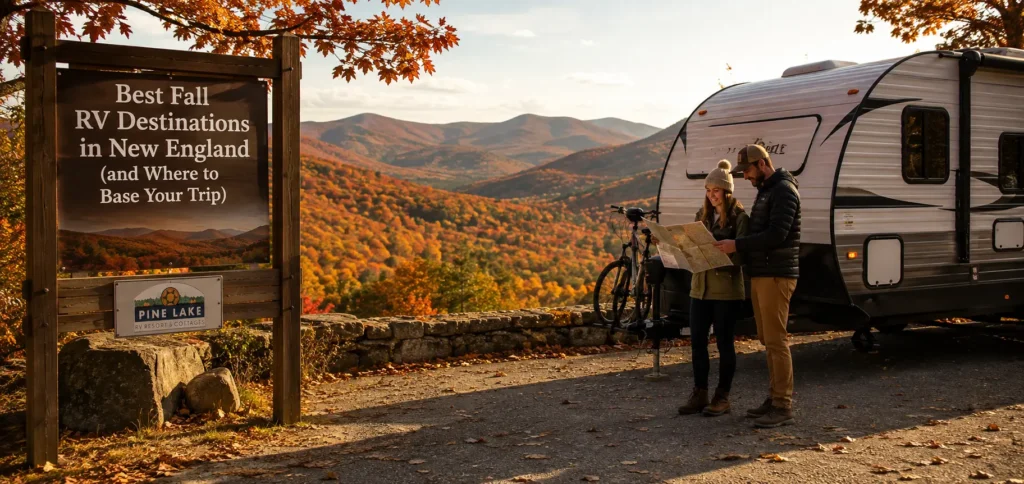
New England foliage doesn’t turn all at once. It starts in the north, in Maine, New Hampshire and Vermont, usually in the last week of September, then works its way south through Massachusetts and Connecticut into early November. That timing matters more than most fall foliage road trip guides admit. A single trip, planned right, can chase color for weeks instead of racing to catch one weekend.
It also means where you park the RV between drives matters. Leaf peeping season fills sites fast once the color hits and a base picked for the wrong reasons can add hours to every day trip. Seven stops worth knowing, starting with the one that makes the rest of the loop easier to reach.
Sturbridge, Massachusetts, sits at the crossroads of the trip
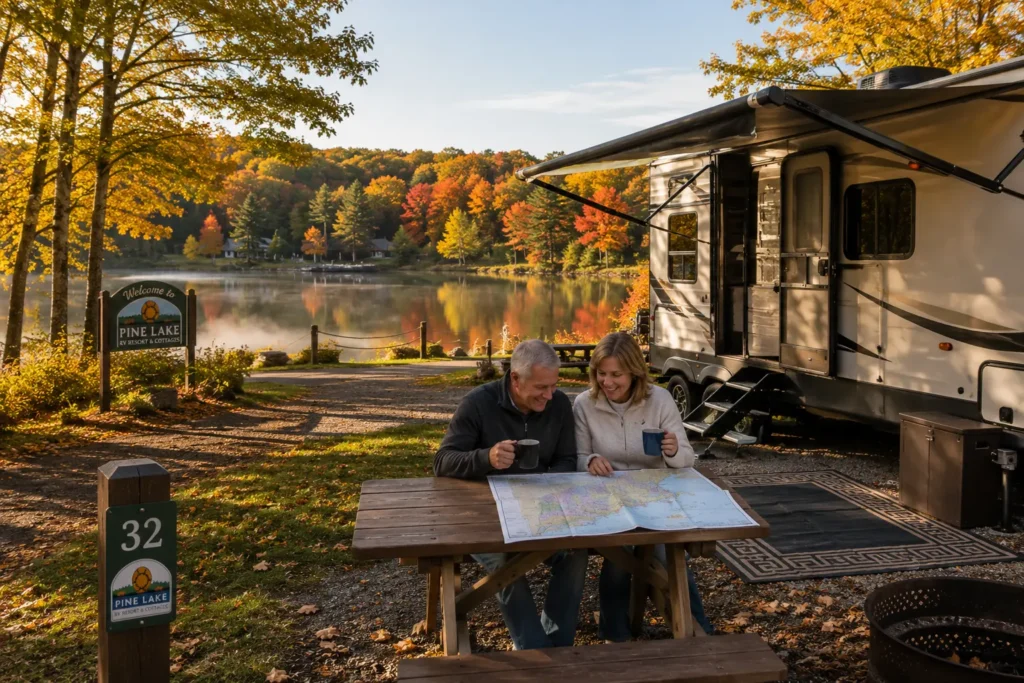
Sturbridge is where I-84 and I-90 meet, which puts it within roughly an hour of Boston, Providence and Hartford and within a half day’s drive of most of the destinations below. It isn’t the flashiest stop on this list. It’s the practical one. A rig parked here doesn’t need to move every night to cover the region and Old Sturbridge Village next door gives you a full day of its own if the weather turns before you head north.
Pine Lake RV Resort and Cottages sits right at that interchange, with full hookup RV sites and handcrafted cottages on an eight-acre private lake. It’s the kind of base that lets you day-trip the Berkshires one day and the White Mountains a couple days later without repacking.
The Berkshires, Massachusetts
Roughly ninety minutes west of Sturbridge, the Berkshires run along the Mohawk Trail, a historic scenic byway that climbs through hardwood forest before dropping into the valley towns below. Mount Greylock, the highest point in Massachusetts, gives you a summit view over the whole color show if you’re up for the drive to the top. Stockbridge is worth the stop on the way, home to the Norman Rockwell Museum and the kind of New England town square that shows up on postcards for a reason.
Stowe, Vermont
Vermont’s Route 100 runs north to south through the heart of the state and it’s often called the skiers’ highway for a reason that has nothing to do with fall. In October it earns a second nickname. Stowe sits near Mount Mansfield and Smugglers’ Notch, both known for dense maple cover that turns early and the town itself still has the covered bridges and white-steepled churches that people picture when they think New England. It’s a longer drive from Sturbridge, closer to three hours, so it works better as an overnight than a day trip.
Woodstock, Vermont
Woodstock sits further south along the same general route, smaller and quieter than Stowe and closer to four hours from Sturbridge by road. The village green, the working farm at Billings Farm and Museum and a handful of covered bridges over the Ottauquechee River give it the look people expect from a Vermont fall postcard, without the crowds that build up around Stowe on peak weekends. It pairs well as a second night on a Vermont stretch of the trip rather than a stand-alone stop.
The White Mountains, New Hampshire
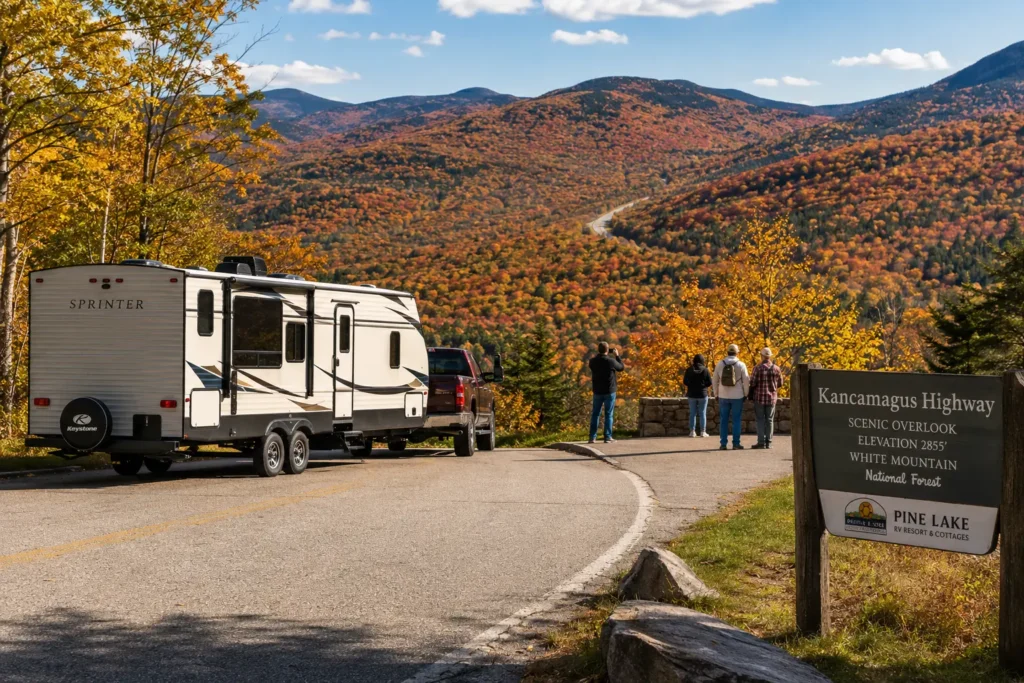
The Kancamagus Highway, locally just called the Kanc, cuts through the White Mountain National Forest for about 34 miles between Conway and Lincoln. It’s one of the most photographed fall drives in the country and for good reason. Franconia Notch State Park sits along the same route, with the Flume Gorge and Cannon Mountain both worth the stop.
RV camping near the Kancamagus usually means basing out of Conway or Lincoln rather than parking along the byway itself. From Sturbridge it’s a real day trip, closer to two and a half hours each way, so plan for an early start or split it into two shorter drives.
Lake Winnipesaukee, New Hampshire
Just south of the White Mountains, Lake Winnipesaukee is New Hampshire’s largest lake, about 21 miles long with close to two hundred miles of shoreline. The hike up Mount Major is the one most people mention, a moderate climb that ends with a view over the whole lake and the mountains beyond it and it’s a favorite for fall color specifically because you’re looking down at the change instead of just driving through it. Towns like Wolfeboro sit right on the water and stay walkable well into fall once the summer boat traffic thins out. It’s roughly two and a half hours from Sturbridge, close enough to pair with a White Mountains stop on the same trip.
Acadia National Park, Maine
Acadia is the farthest stop on this list, close to five hours from Sturbridge. It’s also the only destination here where the foliage meets the coast, and that combination doesn’t exist anywhere else in New England. Park Loop Road and the drive up Cadillac Mountain both put you above the tree line looking down at color running straight into the Atlantic.
RV camping near Acadia means Blackwoods or Seawall, the two developed campgrounds inside the park itself. Both fill up fast once color season starts. Plan weeks ahead, not days.
Litchfield Hills, Connecticut
South of Sturbridge, closer to two hours, the Litchfield Hills offer a quieter version of the same New England fall. Towns like Litchfield and Kent keep their colonial-era architecture largely intact. The pace here is slower, especially once crowds thin out after Labor Day and the bigger-name stops further north get most of the attention. It’s a good closing stop if you’re working your way south as the foliage line moves that direction through October.
How to time the trip around peak fall foliage?
Elevation and latitude both drive the schedule. Higher, more northern spots like the White Mountains and interior Maine typically peak in late September into early October. The Berkshires and southern Vermont usually follow a week or two behind. Connecticut and the coastal stretches run latest, often not peaking until mid-to-late October or even into the first week of November. A regional foliage tracker is worth checking a few days before you leave, since the exact date shifts every year with the weather, but the north-to-south order stays fairly consistent.
Spend your weekend at Pine Lake
Pine Lake RV Resort and Cottages sits at the I-84/I-90 interchange in Sturbridge, about an hour from Boston, Providence and Hartford, with full hookup RV sites and handcrafted cottages built around a private lake. It puts every stop on this list within a manageable drive, without asking you to break camp every night to see the next one. Booking runs directly through Pine Lake’s own site, with real-time availability for fall weekends across the region.
FAQs
When does fall foliage peak in New England?
It depends on where you are. Northern and higher-elevation areas like the White Mountains and interior Maine usually peak in late September into early October. Massachusetts and Vermont typically follow a week or two behind, and Connecticut and coastal areas often don’t peak until mid-to-late October. Checking a foliage tracker a few days before you leave is more reliable than picking a date months in advance.
What’s the best home base for a New England fall RV trip?
A base near a highway interchange with easy access in multiple directions saves the most driving time. Sturbridge, Massachusetts, sits at the junction of I-84 and I-90, which puts the Berkshires, the White Mountains, and southern New England all within a half day’s drive without needing to move sites every night.
Is the Kancamagus Highway RV-friendly?
Yes, it’s a paved state highway built for regular vehicle traffic, including RVs, though the curves and grades mean it’s worth driving at a slower pace than you would on an interstate. Most RVers base out of a nearby town like Conway or Lincoln rather than driving the full route with a loaded rig every day.
Do I need to book fall RV sites further in advance than summer?
For popular stops like Acadia National Park, yes. Campgrounds inside the park fill up weeks ahead once color season starts. Sites further from national parks, including most private RV resorts, tend to have more flexibility, though weekends still book faster than midweek.
How far should I plan to drive in a day during a fall foliage trip?
Most RVers find two to three hours each way is enough for a comfortable day trip that still leaves time to actually stop and look around. Destinations further than that, like Acadia from a Massachusetts base, work better as an overnight or a multi-day stop rather than a there-and-back drive.
Is it worth basing a trip in one place versus moving RV sites each night?
For most fall trips, yes. Foliage destinations are often 90 minutes to a few hours apart, which is well within day-trip range from a central base. Staying in one full hookup site and driving out each day usually costs less setup time than breaking camp and re-hooking up every single night.